US-Iran Peace Deal Deadline Expires: What Is Really Happening in Iran, Oman and the Strait of Hormuz?
By: Javid Amin | 17 Aug 2026
The 60-day window created by the June US-Iran interim agreement has expired without a final peace settlement. Instead of producing a durable ceasefire, the deadline has exposed a much deeper problem: Washington and Tehran no longer agree on what the original agreement required, who violated it first, and what must happen before the Strait of Hormuz can reopen.
The danger is no longer confined to the nuclear dispute.
It now involves:
- Iran’s nuclear programme;
- US sanctions;
- the naval blockade;
- Iranian assets held overseas;
- the Strait of Hormuz;
- oil and LNG shipments;
- regional armed groups;
- Israel;
- Lebanon and Gaza;
- Oman;
- Pakistan’s mediation;
- and the possibility of renewed military escalation.
And in the middle of it all sits one narrow waterway through which a huge share of the world’s energy normally travels.
The immediate question is no longer whether the 60-day deadline has expired. It has.
The real question is:
What happens after the deadline when neither side believes it has received what it was promised?
The 60-Day Deadline Has Expired — But What Actually Expired?
The June agreement was formally known as the Islamabad Memorandum of Understanding between the Islamic Republic of Iran and the United States of America.
The agreement was signed on June 17 and submitted by the White House to Congress on June 18. Pakistan acted as witness and mediator.
The framework was intended to stop the fighting and create enough breathing room for negotiations toward a final settlement.
Among its provisions were:
- cessation of military operations;
- reopening of the Strait of Hormuz to commercial traffic;
- a US commitment concerning its naval blockade of Iranian ports;
- and a 60-day period for negotiating a final agreement.
The White House publicly presented the agreement as a major diplomatic breakthrough, saying it would reopen Hormuz and prevent Iran from obtaining a nuclear weapon.
But the agreement contained a structural weakness.
The parties did not ultimately agree on what compliance looked like in practice.
That weakness has now become the central problem.
The Agreement Started Breaking Down Almost Immediately
The June framework looked significant on paper.
On the ground, however, implementation became increasingly contested.
Washington accused Tehran of failing to reopen the Strait of Hormuz as required.
Iran accused Washington of failing to fulfil its own commitments, including lifting restrictions and releasing Iranian assets.
By early July, President Donald Trump had declared the arrangement effectively over.
Iran subsequently argued that the United States had violated the agreement first.
A senior Iranian official told Reuters in August that Tehran believes Washington violated the arrangement within roughly 48 hours of its signing. Iran has therefore rejected the idea that the 60-day period should be treated as a normal countdown toward a final agreement.
This is why the word “deadline” can be misleading.
Washington sees the 60-day period as having expired after Iran failed to deliver on key commitments.
Tehran says the underlying agreement was already undermined by US actions and that the deadline therefore has “lost its relevance.”
The two sides are not merely negotiating over terms.
They are negotiating over the meaning of the previous agreement itself.
Where the Negotiations Stand Right Now
As of August 18, there is no final peace agreement.
There is no announced extension of the original 60-day framework.
And Washington has publicly rejected the idea of simply extending the expired arrangement.
Reuters reported on August 17 that progress toward peace talks and the restoration of tanker traffic through Hormuz had effectively stalled.
Iran, meanwhile, has moved toward a harder position.
A senior Iranian official told Reuters that Tehran could adopt a more offensive military posture if Washington fails to honour the interim agreement within a new period of weeks.
That is a major escalation in language.
The Iranian message is essentially:
Diplomacy remains possible — but Tehran is preparing for military action if diplomacy fails.
The Biggest Misunderstanding: This Is Not Just a Nuclear Negotiation
The original summary correctly identifies nuclear enrichment as a central issue, but the current crisis is much broader.
Washington wants guarantees that Iran cannot develop a nuclear weapon.
The White House has publicly stated that Iran will not be allowed to obtain one and has described the June agreement as a mechanism for preventing that outcome.
But Tehran’s priorities extend well beyond uranium enrichment.
Iran wants:
- sanctions relief;
- access to frozen assets;
- an end to the US naval blockade;
- recognition of Iranian sovereignty and sovereign rights;
- restoration of oil exports;
- compensation for wartime damage;
- and security guarantees against renewed American military action.
Iran also wants the United States to stop treating the Strait of Hormuz as an instrument of American military pressure.
That creates an enormous bargaining problem.
Washington’s basic equation
Nuclear restrictions + verification + security concessions = sanctions relief
Tehran’s basic equation
Sanctions relief + end of blockade + security guarantees = nuclear concessions
Neither side wants to make its biggest concession first.
That is the heart of the deadlock.
Hormuz Has Become the Real Battlefield of the Negotiations
The nuclear issue is strategically enormous.
But Hormuz is where the diplomatic dispute has become economically tangible.
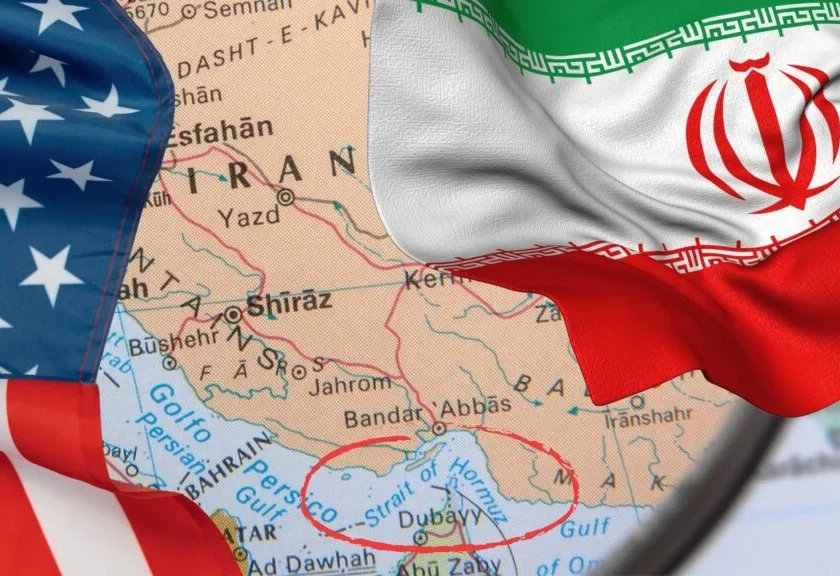
The Strait of Hormuz connects the Persian Gulf to the Gulf of Oman and the wider Indian Ocean.
Under normal conditions, roughly 20 million barrels of oil per day move through the waterway.
The current disruption has dramatically reduced that traffic.
Reuters reported on August 18 that oil flows through Hormuz had fallen from around 18 million barrels per day to roughly 2 million barrels per day, with alternative routes unable to fully compensate.
That is an extraordinary contraction.
It means the world is no longer discussing a hypothetical Hormuz closure.
The global economy is already experiencing a partial Hormuz disruption.
Why Iran Believes Hormuz Gives It Leverage
Iran’s geography gives Tehran an unusual bargaining advantage.
Iran sits directly along the northern side of the Strait of Hormuz.
Oman controls the other coastal side.
The waterway is narrow, strategically exposed and surrounded by countries whose economies depend heavily on maritime energy exports.
Iran therefore does not necessarily need to physically block every ship.
It can create uncertainty.
That alone can produce:
- higher insurance premiums;
- higher tanker rates;
- delays;
- rerouting;
- reduced shipping;
- higher oil prices;
- and increased pressure on governments.
The economic weapon is therefore not simply closure.
It is uncertainty over access.
But Washington Has Its Own Hormuz Strategy
The United States does not accept Tehran’s claim that Iran alone determines access through the strait.
The Trump administration has repeatedly asserted that US forces possess substantial control over maritime access.
The White House said in July that the United States had “total naval control” of Hormuz and maintained that Washington’s military position could be used to keep pressure on Iran.
That produces a dangerous strategic contest:
Iran says it controls the reopening.
The United States says it controls the maritime security environment.
The commercial shipping industry is caught between the two.
The Oman Factor Is More Important Than It First Appears
This is perhaps the most important development of the past few weeks.
Oman is not merely another Gulf country.
It is one of the few states that maintains working relationships with both Washington and Tehran.
Historically, Muscat has played an important behind-the-scenes diplomatic role in US-Iran contacts.
And geographically, Oman is directly connected to the Strait of Hormuz.
Iran and Oman are now working on a mechanism for shipping through the strait.
This is not a sudden development.
Oman has been involved since the June agreement.
On June 23, Oman and Iran officially stated that they would work together on the future administration of navigation in Hormuz, including navigation services and associated costs, while stressing the sovereignty and sovereign rights of the two coastal states.
Oman subsequently worked with the International Maritime Organization to establish a temporary maritime corridor.
In July, Oman reiterated that it was cooperating neutrally with all parties to restore freedom of navigation.
So the current Iran-Oman discussions are not an improvised diplomatic initiative.
They are the continuation of a process that began immediately after the June agreement.
Why Trump Is Angry With Oman
This is where the crisis has taken a dramatic turn.
Trump has accused Oman of getting in the way of an agreement involving Iran and the Strait of Hormuz.
On August 17, he threatened military action against Oman if it interfered with US efforts.
That threat is extraordinary because Oman is not simply a neutral third party.
It is also a long-standing US partner.
The remarks therefore risk damaging one of Washington’s most useful diplomatic channels with Tehran.
And this creates a major contradiction.
Washington needs Oman because:
Oman can talk to Iran.
But Washington is now publicly pressuring Oman because:
Oman is talking to Iran.
That is precisely why the threat has alarmed diplomats and regional governments.
Oman Is Trying to Do Something Quite Different From What Washington Fears
Muscat’s public position is not that Iran should permanently control Hormuz.
Quite the opposite.
Oman has repeatedly said it wants:
safe, secure and free navigation in accordance with international law.
Its foreign ministry says Oman has a special responsibility because it is one of the two coastal states of the strait.
Oman’s approach is therefore:
Iran + Oman + international maritime community = practical navigation arrangement
Washington’s concern appears to be that such an arrangement could allow Iran to retain too much leverage over Hormuz.
That is where the interests collide.
The Hidden Dispute: Who Controls Hormuz?
This is arguably the central issue beneath the diplomacy.
Iran argues that the two coastal states — Iran and Oman — have sovereignty and sovereign rights over their territorial waters.
Oman has explicitly used this language in its joint statement with Iran.
Washington, however, is operating from a military-security perspective.
The US wants freedom of navigation without allowing Tehran to use the strait as a political weapon.
That produces two different concepts:
Iranian/Omani framework
Navigation should be governed by the coastal states and international maritime law.
US framework
Navigation must remain free from Iranian coercion and military control.
Those positions are not necessarily impossible to reconcile.
But the political distrust between Washington and Tehran makes compromise extremely difficult.
Why Iran and Oman Are Actually Getting Closer to a Shipping Arrangement
Despite the political crisis, technical discussions have continued.
Oman and Iran held further discussions in July over safe navigation.
Oman has described its role as both technical and diplomatic.
The objective is to create a mechanism under which commercial shipping can safely move through the waterway while respecting the sovereignty claims of the two coastal states and international maritime law.
Recent reporting says Iran and Oman are working toward a joint statement concerning a shipping route through Hormuz.
That is important because it means diplomacy has not completely collapsed.
It has simply moved away from the grand US-Iran peace agreement and into smaller, practical negotiations.
This Is the Most Important Distinction Right Now
There are actually two negotiations taking place.
Negotiation One: The Big US-Iran Settlement
This involves:
- nuclear restrictions;
- sanctions;
- military forces;
- Iranian assets;
- regional security;
- and the future relationship between Washington and Tehran.
This track is stalled.
Negotiation Two: The Hormuz Navigation Arrangement
This involves:
- shipping lanes;
- maritime safety;
- navigation services;
- sovereignty;
- transit procedures;
- and regional coordination.
This track is still alive.
That is why the situation is dangerous but not hopeless.
The grand peace process is struggling.
The technical diplomacy has not completely died.
Pakistan’s Role Has Also Changed
Pakistan played a significant role in the June framework.
Islamabad acted as mediator and witness to the US-Iran memorandum.
Pakistan subsequently attempted to keep the diplomatic channel alive.
But Islamabad faces a difficult problem.
It has close relations with Iran.
It also has a strategic relationship with the United States.
And Pakistan is itself economically vulnerable to a prolonged energy crisis.
That makes Islamabad a potentially useful mediator — but not a powerful enough actor to force either Washington or Tehran to compromise.
Pakistan can carry messages.
It cannot impose a settlement.
The Nuclear Issue Remains the Hardest Strategic Problem
The central American demand remains straightforward:
Iran must not acquire a nuclear weapon.
But what Tehran is willing to concede remains unclear.
The difficult questions include:
- How much uranium enrichment can Iran retain?
- At what enrichment level?
- Where will enriched material be stored?
- Who will monitor Iranian facilities?
- What happens to damaged or inaccessible sites?
- What role will the IAEA have?
- What sanctions are lifted first?
- What happens if either side claims the other violated the deal?
These are not minor technical questions.
They determine whether the agreement can survive.
Iran’s Problem: Why Give Up Leverage Before Getting Sanctions Relief?
From Tehran’s perspective, the previous agreements provide a lesson.
Iran believes it has repeatedly made commitments only to see sanctions return or military pressure resume.
Therefore, Iranian negotiators want tangible economic relief before making irreversible nuclear concessions.
That means:
money first, guarantees first, restrictions later.
Washington wants almost the opposite:
nuclear restrictions and verification first, sanctions relief later.
That sequencing dispute could kill the talks even if both sides agree on the final destination.
Trump’s Problem: He Needs a Deal Without Looking Like He Gave Iran One
There is also a domestic political dimension in Washington.
Trump has repeatedly presented his Iran strategy as one based on pressure and strength.
The White House’s own description of the June agreement emphasised American leverage and said the deal would prevent Iran from acquiring a nuclear weapon while reopening Hormuz.
If Trump now offers extensive sanctions relief, releases large amounts of Iranian assets and accepts a major Iranian role in Hormuz, opponents could portray the agreement as a concession.
At the same time, a prolonged war is costly.
Oil prices are rising.
US military assets are under pressure.
The conflict is consuming resources.
And the risk of a wider Middle East war remains.
Trump therefore needs something that can be presented domestically as:
peace achieved through pressure.
That is much harder than simply declaring a ceasefire.
Iran’s Problem Is Equally Serious
Tehran also has limited room.
The Iranian economy has suffered from sanctions and war.
Oil exports are under pressure.
Shipping is disrupted.
Military infrastructure has been damaged.
The country is facing significant economic costs.
But Iran also believes that surrendering under pressure could undermine the regime’s credibility.
That creates another strategic dilemma:
Iran needs economic relief, but cannot appear to have surrendered.
Therefore, Iranian negotiators need a deal that can be presented domestically as a negotiated victory rather than capitulation.
Why Trump’s “Surrender” Language Matters
Trump’s recent rhetoric has become significantly harder.
He has demanded that Iran effectively capitulate and said the United States would not accept an outcome that allows Iran to develop nuclear weapons.
Iran, unsurprisingly, cannot easily accept the political language of surrender.
This is important because negotiations require each side to sell the agreement to its own domestic audience.
If one leader says:
“Iran surrendered,”
Iranian leaders cannot easily return home and say:
“We achieved a successful diplomatic settlement.”
The rhetoric therefore narrows the space for compromise.
Is the War About to Restart?
Not necessarily — but the risk has increased sharply.
The most important evidence is that both sides continue to leave diplomatic doors partially open.
Iran is still communicating through intermediaries.
Oman is still talking to Tehran.
Pakistan is still involved.
Qatar and other regional actors remain engaged.
And Washington has not announced the immediate start of a new major military campaign.
But the military rhetoric is becoming more dangerous.
Iran has threatened an offensive response if the US does not meet its demands.
Washington has threatened severe economic consequences.
And the Hormuz shipping crisis continues.
This is a classic situation in which diplomacy and military preparation are happening simultaneously.
The Most Dangerous Trigger: Another Attack on Shipping
The next major escalation could come not from a diplomatic meeting but from the sea.
If another tanker is attacked, several things could happen rapidly:
- Insurance rates increase.
- More shipping companies withdraw.
- Oil prices rise.
- The US responds militarily.
- Iran retaliates.
- Regional forces become involved.
- Hormuz traffic falls further.
That is the escalation ladder everyone is trying to avoid.
Reuters reported that shipping attacks and the diplomatic stalemate have already been pushing oil prices higher.
Oil Markets Are Already Pricing in a Longer Crisis
The financial market is beginning to distinguish between:
temporary disruption
and
structural disruption.
Reuters reported on August 18 that crude prices were around $90 a barrel, roughly 50% above the beginning of the year, as markets increasingly priced in prolonged disruption rather than a short-lived crisis.
This matters because energy markets influence almost everything else.
Higher oil means:
- more expensive transport;
- higher diesel prices;
- higher airline costs;
- greater inflationary pressure;
- higher manufacturing costs;
- more expensive food distribution;
- pressure on central banks;
- and weaker consumer purchasing power.
The longer Hormuz remains disrupted, the greater the chance that the conflict becomes an economic crisis far beyond the Gulf.
India Is One of the Countries Watching This Closely
For India, Hormuz is strategically important.
India is a major importer of crude oil and has substantial commercial relationships with Gulf energy producers.
A prolonged disruption could affect:
- crude import costs;
- freight rates;
- insurance;
- the rupee;
- inflation;
- aviation fuel;
- diesel;
- LPG and energy costs;
- and industrial production.
India also has strong relations with Oman.
That gives New Delhi an important diplomatic interest in keeping Oman’s mediation channel alive.
India therefore has an interest in de-escalation without becoming directly involved in the US-Iran dispute.
Gulf Countries Are in an Extremely Difficult Position
Saudi Arabia, the UAE, Qatar, Kuwait, Bahrain and Oman all have something to lose.
They want:
Iran contained.
But they also want:
Iran not at war with the United States.
They want:
American security guarantees.
But they also want:
American forces not to turn their territories into launchpads for a larger regional war.
And above all, they want:
Hormuz open.
This explains why Gulf governments are increasingly supporting diplomatic mechanisms even when they remain strategically aligned with Washington.
The Gaza and Lebanon Connection Has Not Disappeared
The Iran conflict cannot be separated from the wider Middle East.
Iran’s relationship with Hezbollah in Lebanon, armed groups in Iraq and the Houthis in Yemen remains a major concern for Washington and its regional partners.
Lebanon has experienced some stabilisation under related ceasefire arrangements, but the broader regional conflict remains unresolved.
The Houthi factor is especially important because attacks in and around the Red Sea create another maritime pressure point.
That means the world is facing not one but multiple interconnected shipping chokepoints.
Hormuz affects Gulf oil and LNG.
The Red Sea affects the Suez route and global container shipping.
A simultaneous crisis in both areas could produce a much larger global economic shock.
Why the 60-Day Failure Does Not Automatically Mean War
This is an important point.
The expiration of an agreement does not automatically mean military conflict resumes the next morning.
Diplomatic agreements often collapse, expire or become politically obsolete while indirect negotiations continue.
That appears to be what is happening now.
The formal framework has expired.
But:
- Oman is still talking;
- Pakistan is still involved;
- Iran is still communicating through intermediaries;
- Washington is still discussing possible outcomes;
- and technical Hormuz negotiations continue.
The diplomatic process has therefore not disappeared.
It has fragmented.
The Most Plausible Scenarios From Here
Scenario 1: A Narrow Hormuz Deal
This is currently one of the more realistic possibilities.
Iran and Oman reach a practical arrangement allowing selected commercial shipping to resume.
The US does not immediately receive everything it wants.
Iran does not receive full sanctions relief.
But shipping resumes.
Result:
- oil prices ease;
- insurance costs decline;
- diplomatic channels reopen;
- broader nuclear talks become possible.
This would not be a peace treaty.
It would be a risk-reduction agreement.
Scenario 2: Backchannel US-Iran Negotiations Resume
This could happen through:
- Oman;
- Pakistan;
- Qatar;
- or another intermediary.
The two sides could agree to a phased process.
For example:
Iran permits wider shipping → US eases specific sanctions → nuclear inspections resume → further sanctions relief follows.
This is probably the most practical route toward a larger agreement.
Scenario 3: Prolonged “Neither War Nor Peace”
This may actually be the most likely short-term scenario.
No major new US offensive.
No comprehensive peace agreement.
Limited attacks.
Reduced shipping.
Sanctions remain.
Diplomatic messages continue.
Oil remains elevated.
Both governments continue preparing for escalation while publicly saying they prefer diplomacy.
This could last for weeks or months.
Scenario 4: Major Military Escalation
The most dangerous scenario.
A major attack on:
- a US military asset;
- an Iranian facility;
- a tanker;
- Gulf infrastructure;
- or a regional ally
could trigger rapid escalation.
The Strait of Hormuz would then become the centre of a wider regional conflict.
Oil prices could rise sharply.
What Would Actually Signal a Breakthrough?
Ignore most political speeches.
Watch the practical indicators.
1. Tankers begin moving again
This would be the clearest sign that something is changing.
2. The US reduces maritime pressure
That would indicate Washington is willing to trade military leverage for diplomacy.
3. Iran permits broader navigation
That would indicate Tehran is willing to separate Hormuz from the larger political dispute.
4. Frozen Iranian assets are released
That would be a major Iranian economic concession from Washington’s side.
5. IAEA access resumes
That would be the strongest signal of movement on the nuclear track.
6. Oman stops being attacked rhetorically
If Washington needs Muscat as a mediator, reducing public confrontation would make diplomatic sense.
7. Oil prices fall on diplomatic news
Markets often detect genuine progress before politicians publicly declare it.
What Could Kill the Diplomacy Completely?
Several developments would make a settlement much harder.
A major attack on American forces
That would dramatically increase domestic pressure on Trump to retaliate.
A major attack on Iranian infrastructure
Tehran could conclude that diplomacy has failed permanently.
A tanker disaster in Hormuz
This could trigger immediate international pressure for military intervention.
Collapse of Oman’s mediation role
This would remove one of the most important communication channels.
Nuclear escalation by Iran
Any move interpreted as a decisive step toward weaponisation would make compromise much harder.
Direct confrontation involving Gulf states
If Oman, Qatar, Saudi Arabia or the UAE became direct targets, the conflict could expand rapidly.
The Oman Threat Could Actually Make a Deal Harder
This is perhaps the most counterintuitive aspect of the current crisis.
Washington wants Hormuz reopened.
Oman is trying to negotiate a mechanism for reopening it.
Yet public threats against Oman could weaken the very diplomatic channel that might achieve the objective.
Oman has spent years cultivating credibility with Iran and Western governments.
If Muscat believes its neutrality is no longer respected, it has less incentive to take political risks on behalf of Washington.
That is why the threat against Oman is diplomatically costly even if intended as pressure on Tehran.
Iran’s “Offensive” Warning Should Also Be Taken Seriously — But Carefully
Iran’s warning does not necessarily mean an attack is imminent.
It can serve several purposes:
- deterrence;
- negotiation pressure;
- domestic signalling;
- military mobilisation;
- and preparation for possible escalation.
But the language matters.
Iran previously presented its position largely as defensive:
the US must honour the agreement.
The newer message is:
if diplomacy fails, Iran will take military action.
That is a meaningful change.
Reuters described Iran as moving toward a more offensive posture.
The Core Strategic Reality
Neither Washington nor Tehran currently has an easy path to victory.
If Trump escalates
He risks:
- higher oil prices;
- wider regional war;
- attacks on US forces;
- pressure from allies;
- and economic consequences at home.
If Iran escalates
Tehran risks:
- further military strikes;
- deeper sanctions;
- destruction of infrastructure;
- economic isolation;
- and greater pressure from Gulf neighbours.
If both compromise
Both leaders can claim victory.
That is the paradox.
A face-saving compromise is easier than an outright surrender.
But the current rhetoric is moving in the opposite direction.
So, What Is the Situation on the Ground Right Now?
As of August 18, 2026, the best description is:
A collapsed interim peace framework, a still-open diplomatic backchannel, a severely disrupted Strait of Hormuz, and a growing risk of renewed military escalation.
The 60-day window has expired.
The final peace agreement has not materialised.
Washington has rejected simply extending the old arrangement.
Iran says the US must return to the interim framework and fulfil its commitments.
Oman is continuing to work with Iran on a practical navigation arrangement.
Pakistan remains an important intermediary.
Oil markets are pricing in a prolonged disruption.
And Iran has warned that it may shift toward a more offensive posture if diplomacy fails.
This is therefore not yet a full return to war, but it is also no longer a stable ceasefire.
It is a dangerous middle ground.
The Bigger Question: Who Blinks First?
That is ultimately what this crisis has become.
Trump wants Iran to believe that continued resistance will become more expensive.
Iran wants Washington to believe that continued pressure will become more expensive.
Oman wants to keep a diplomatic bridge alive.
Pakistan wants to prevent another major regional war.
Gulf states want Hormuz open without becoming targets.
Global markets want certainty.
And commercial shipping companies simply want a safe route.
Everyone has different priorities.
But there is one point on which almost everyone agrees:
A prolonged shutdown of the Strait of Hormuz is unsustainable.
The question is whether Washington and Tehran reach that conclusion before another military escalation forces them back to the negotiating table.
Bottom Line
The 60-day US-Iran peace framework has expired, but the diplomatic process has not completely died.
What has collapsed is the original political framework.
What remains are fragments:
Oman-Iran navigation talks.
Pakistan’s mediation channel.
Indirect US-Iran communication.
Pressure over sanctions and frozen assets.
The nuclear dispute.
And a rapidly worsening maritime crisis.
The most immediate priority is no longer negotiating a grand Middle East peace settlement.
It is much more basic:
Get ships moving safely through Hormuz.
Once maritime traffic begins returning to normal, oil markets can breathe, regional governments can reduce their military alert levels and Washington and Tehran may regain enough confidence to address the nuclear question.
If Hormuz remains effectively closed, however, every other negotiation becomes harder.
That is why the next few weeks could be decisive.
The 60-day clock has stopped. The geopolitical clock has not.
And the world’s attention is now fixed on three places:
Washington. Tehran. And Muscat.